
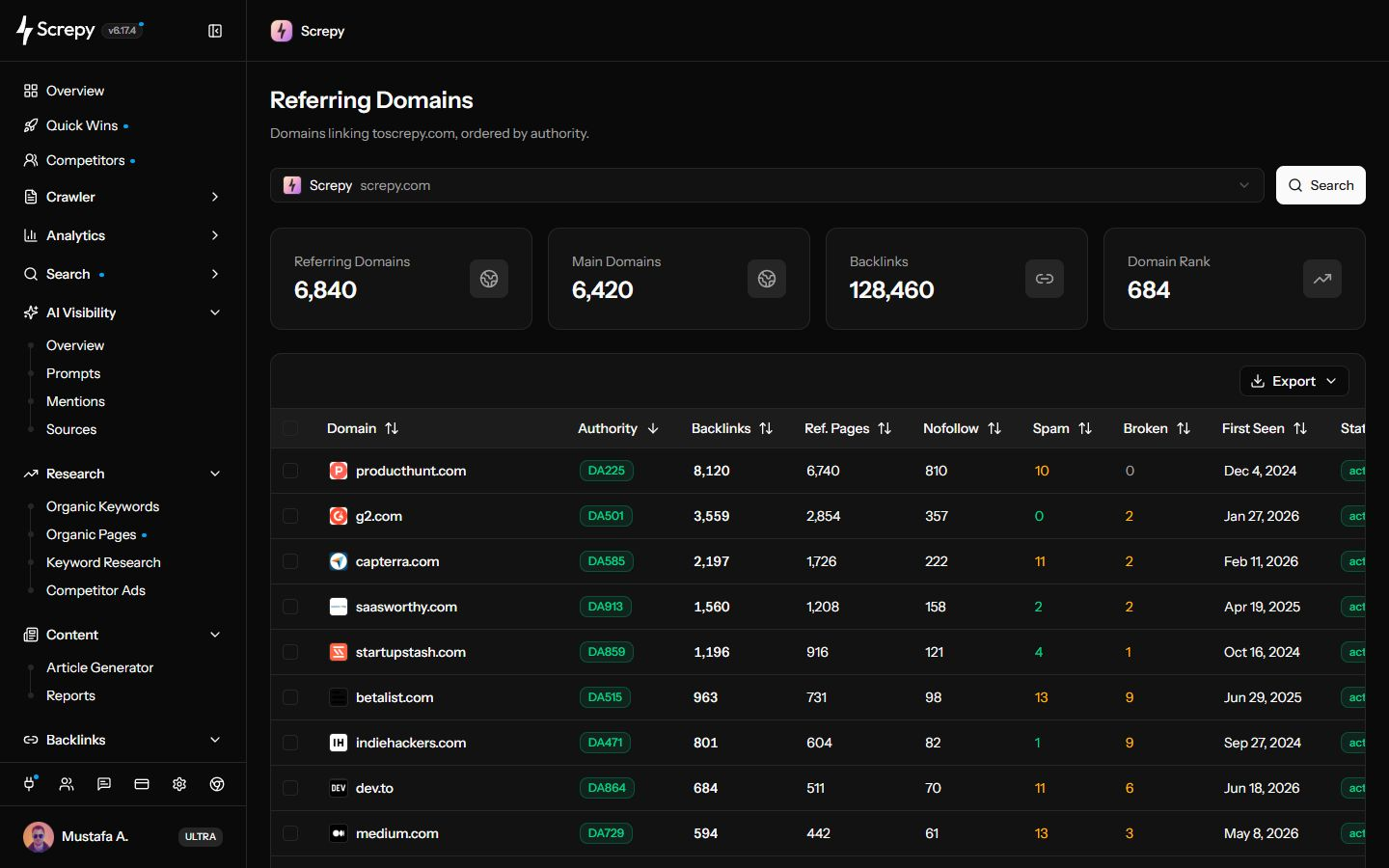











Referring domain discovery
Find the websites linking to a domain and build a clearer view of backlink-source diversity across the profile.
Screpy Referring Domains helps you understand which websites link to your domain. Review authority, linking pages, backlink counts, follow status, spam signals, broken links, and discovery dates in one off-page SEO view.
Too Long; Didn't Read
Screpy Referring Domains is a domain-level backlink view that groups external links by the website providing them. It reports the source’s authority and spam context, backlink and referring-page counts, follow patterns, broken links and pages, first-seen and lost dates, and review actions for off-page SEO maintenance.
Group backlinks by referring domain to understand where external authority comes from and which websites contribute the most links and referring pages.
Review authority context, spam signals, follow status, relevance, and link patterns before deciding which domains represent value or risk.
Track changes in referring-domain diversity and investigate important sources that appear, disappear, or begin pointing to broken website pages.
Review link sources, domain quality, backlink counts, discovery dates, broken links, and referring-domain changes.
Find the websites linking to a domain and build a clearer view of backlink-source diversity across the profile.
See how many backlinks and referring pages each domain contributes instead of reviewing every external link in isolation.
Use available domain-quality indicators as supporting context when reviewing potentially valuable or suspicious link sources.
Review followed and nofollow link patterns from each referring domain to better understand how external links are marked.
Monitor when referring domains enter or leave the profile and investigate changes that may affect important pages.
Find domains linking to unavailable pages so useful external paths can be restored, redirected, or reviewed.
Identify the domains and pages most closely connected to your topics when planning outreach or digital PR work.
Document new, lost, and reviewed referring domains in clear updates that connect authority changes to ongoing SEO work.
Compare the number of linking pages behind a domain to distinguish a one-off mention from a deeper relationship.
See which website pages each domain links to so important landing pages and content assets can be protected and improved.
Review followed and nofollowed link patterns across domains as part of a broader authority and quality assessment.
Keep new, lost, broken, and reviewed domain activity organized in updates that make off-page changes easier to explain.
Review both broken backlinks and broken pages for a referring domain before deciding whether to repair a destination or investigate the source.
Use the reported lost date to investigate when a referring domain stopped contributing to the link profile.
Use the first-seen date to distinguish recently discovered referring domains from established sources in the profile.
Select suspicious referring domains for review and send them to the disavow workflow when a manual assessment supports that action.
Understand referring domains, backlink-source diversity, domain-quality signals, and link-profile changes.
A referring domain is a website that links to another website. One referring domain may provide one backlink or many backlinks from different pages.
They answer different questions. Backlink count shows the number of links, while referring domains show how diverse the link sources are. Quality, relevance, placement, and natural link patterns matter more than maximizing either number alone.
Review its relevance, linking pages, target URLs, backlink count, follow status, authority context, spam signals, and whether its links remain available. No single metric should determine the final judgment.
A domain may disappear when links are removed, source pages are deleted, links become unavailable, or data changes during a new crawl. Investigate valuable losses before deciding whether outreach or page recovery is appropriate.